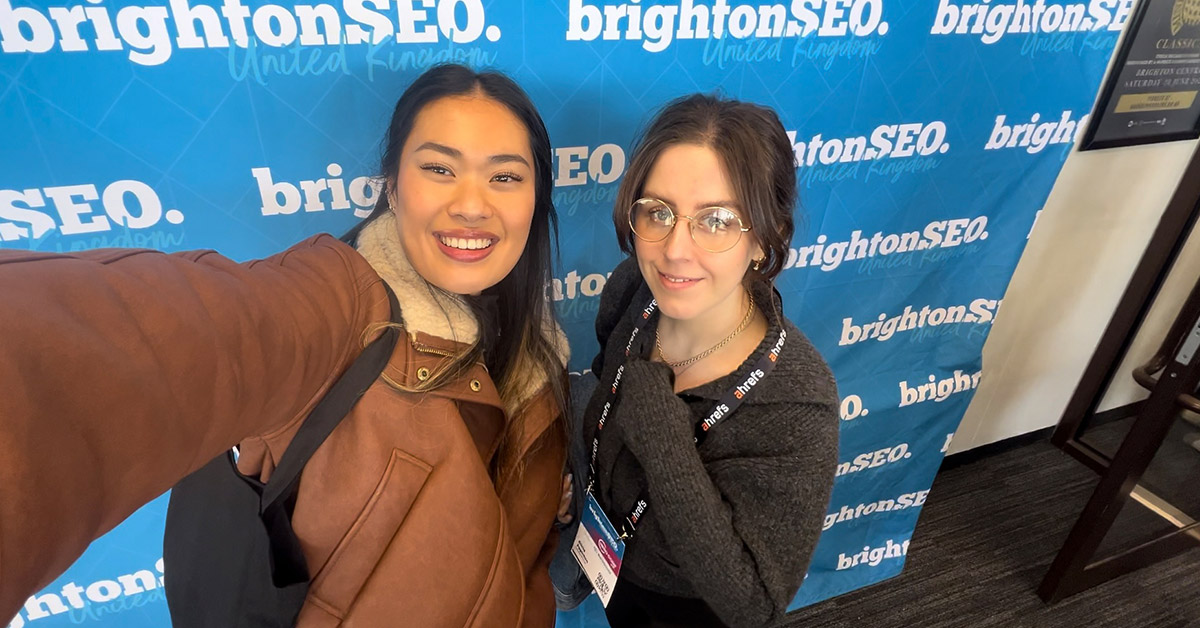
If BrightonSEO taught us anything, it’s that SEO is still (and always will be) about people. Their habits, their platforms, their expectations. This year’s event gave us a clear view into what your customers really want – and how they’re finding it.
As SEO Content Writer and SEO Consultant, we had the opportunity to explore Brighton (in the sunshine!), learn from some of the brightest minds in search, and chat about all things SEO.
Read our BrightonSEO Insights from October 2025!
Why we keep coming back to BrightonSEO
Search engine optimisation is constantly evolving. That’s a given. It means that our jobs as SEOs have to adapt too. We need to stay on top of industry trends and the latest SEO news, and we need to be open to adjusting our strategies.
That’s why we keep coming back to BrightonSEO.
But, on top of that, it’s also a really fun event that gets the creative juices flowing. It helps us bounce ideas off one another, test out new skills (like taking over the company LinkedIn account to keep our clients and colleagues updated), and enjoy some productive time away from the screen.
The biggest themes we saw this year
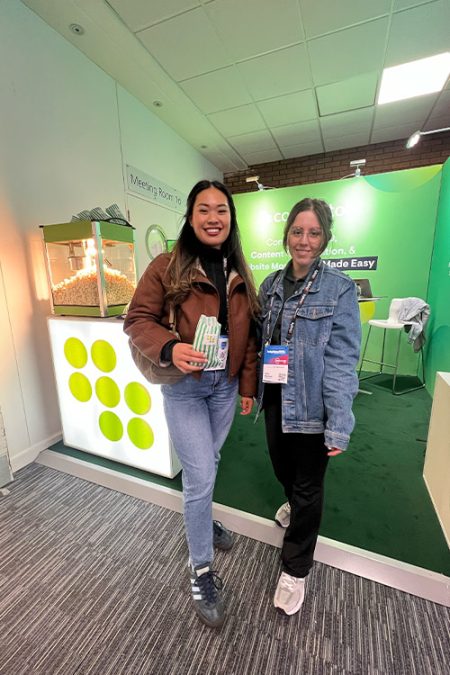
We attended over 20 talks across the two-day event and took many, many notes.
But the overarching theme we saw was that people are changing the way they search. With the rise of social media and AI, audiences are becoming less patient and want fast answers and scrollable content.
Throughout the rest of this blog, we explore the top five themes we noticed at BrightonSEO this April. Keep reading or jump to a section to learn more about a specific topic.
- Human-first content is here to stay
- Your audience is evolving
- AI and LLMs are changing how we search
- Visual and social search are on the rise
- Your content strategy needs to be smarter
Human-first content is here to stay
Despite the rise of AI-generated content, one thing remains clear:
Content that resonates with real people wins!
Google’s Helpful Content updates make this official, but more importantly, users themselves demand it. SEO is about serving your audience with purpose, clarity, and value.
The best-performing content today doesn’t just inform; it connects.
We’ve seen a rise in community-led marketing and a change in the SERPs, where forums and online communities rank highly due to their authentic responses. Why spend time painfully scrolling through a blog that lacks human touch when you can get a real-life answer that can be challenged or validated by another community member?
Great content taps into psychological drivers, it:
- Empathises with pain points
- Mirrors the audience’s mindset
- Offers emotional connection
Personalised, relevant messaging isn’t a “nice to have”, it’s essential.
So what can you do today?
Audit your website, and see where your content gaps are and where it may lack your expertise and personality. You need to consider your company branding and tone of voice to differentiate yourself from all the noise and AI-generated content out there. Believe us, we can tell the difference between authentic content and content that lacks zest, and so can your audience.
Yes, we still optimise headlines, structure, and metadata. But the shift is toward producing content that gets people thinking, keeps them engaged, and encourages them to act, not just rank for the sake of it. Try using a more conversational tone (if it fits your brand), tell a story, provide clarity, and always give your audience a real answer. You are the expert after all.
Your audience is evolving
The way we search is changing.
While older generations may be happy to just “Google it”, younger generations are becoming restless. People no longer stick to traditional search engines for their queries.
They want instant, relevant, bite-sized answers, so they are searching for content in different ways:
- Using LLMs and AI search tools (ChatGPT, Gemini, Perplexity, etc.)
- Talking to chatbots
- Communicating in forums (like Reddit)
- Asking TikTok
- Purchasing directly through social media (Facebook, TikTok, and Instagram)
SEO is no longer confined to the SERP, but this doesn’t mean you can’t reach your audience.
Firstly, we’re not telling you to drop everything and become a social media sensation. Websites still hold a lot of authority. Having a website that is optimised for users and search engines serves as a strong foundation for online visibility, as people often refer to websites and Google Business Profiles when researching your brand. So good web SEO remains crucial for long-term success. But you may need to adapt your content strategy to suit your target audience better.
Ask your clients about their search habits and preferred platforms. Chances are, you’re not where they need you to be. You may benefit from using other platforms like TikTok, YouTube, or LinkedIn to engage and interact with users who could become your clients.
Providing various types of content will open you up to new audiences and help you establish yourself as an industry leader. Unsure where to start? Repurpose blog content. A single blog could become a LinkedIn carousel, a poll, or a video script. If you answer someone’s question through LinkedIn, where’s the first place they’ll look? Your website. So the cycle continues: you answer your audience’s questions through a blog, a short video, or an FAQ, and they search for you.
AI and LLMs are changing how we search
Google and AI offer entirely different user experiences.
Google is more navigational
- People use Google more to search for specific websites and brands than to explore broad topics. That’s why your website needs to be visible and your brand image needs to be consistent.
AI is more conversational
- Platforms like ChatGPT allow deep, contextual conversations. Instead of using 2 or 3 keywords (like with Google), users are writing full prompts asking for personalised suggestions.
AI Overviews are seemingly the evolution of Featured Snippets, though they are still about. With dynamic, context-driven summaries from multiple sources rather than static pull quotes, users are sustained on the SERP rather than clicking through each ranking result to find their answer.
What makes AI Overviews different to featured snippets? They rely more heavily on content depth, clarity, and semantic structure. If your content isn’t easy for AI to understand, you will become invisible.
To compete in this environment, your content requires structure. Clear H2s, concise takeaways, and well-defined sections all help LLMs and search engines extract meaning.
We always conduct research before writing. Our SEO team creates briefs for our content writers to ensure the material is structurally sound and coherent with search trends and analytics.
More importantly, your tone of voice must stand out. Brand visibility now extends beyond keywords. It resides in how your expertise is surfaced and interpreted by both machines and humans. We work with our clients to ensure their brand shines through in the content we create, helping them stand out in the SERPs.
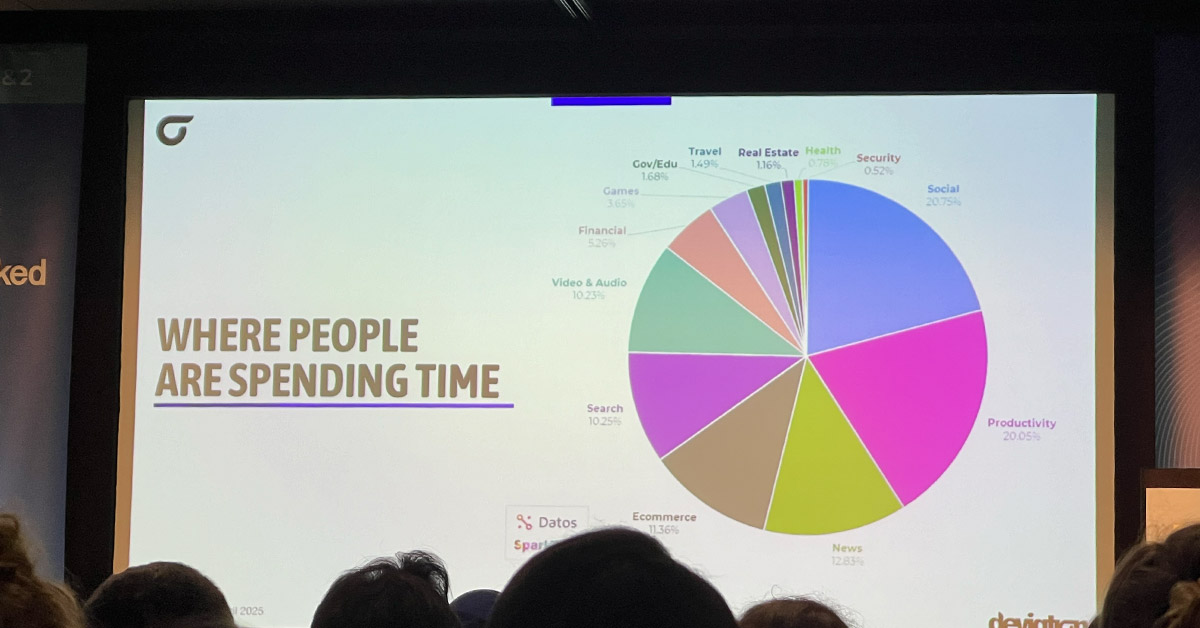
With around 60% of Gen Zs and millennials saying they preferred searching on social media, it’s becoming harder to show up on page 1. Google now pulls content from social and video platforms into the search results, meaning a well-optimised YouTube video or TikTok clip can outperform a traditional blog.
Brands need to think beyond the written word and create content that moves — literally.
Of course, this depends on the industry you’re in, so take a look at what your competitors are doing. If they’re on TikTok, examine their content, how it’s performing, and how their audience engages with it. If it seems feasible and you see value in it, then it’s time to throw your hat in the ring and give it a shot.
We support our clients with the new content strategies they wish to adopt. Search engines aren’t just Google or Bing anymore; they’ve also expanded into social media and AI.
Your content strategy needs to be smarter
It isn’t about doing more content – it’s about doing smarter content. That means aligning with actual search intent, creating reusable content clusters, and mapping every piece to a customer journey stage and mindset.
One thing that stood out to us was that
61% of users will leave your site for a competitor if they don’t find what they’re looking for within five seconds.
It’s a scary figure, but it’s also an opportunity.
Yes, keywords still matter. However, the days of keyword stuffing are over. Focus on topics, themes, and the questions your audience is genuinely asking. Think in terms of problems, not phrases.
Ask yourself these questions (and be sure to answer them through your content):
- What does my audience really care about?
- What challenges are they trying to solve?
- What questions do they ask in discovery meetings and sales calls?
- Are there any content gaps on my website?
- Where do they hang out online?
We constantly ask our clients what their most frequently asked questions are, as this needs to be visible on their site! Chances are, another person or business is already searching for this information, so if you can provide them with a solution through your blogs or services, then you’re looking at a potential new lead.
Caroline’s thoughts as an SEO Consultant
There’s no doubt that search is changing. In the few years I have been an SEO Consultant, I have seen a rapid rate of AI adoption. From people in our industry to clients and users, individuals have quickly started to learn and incorporate AI into their daily lives.
I’ve spent years adapting to Google’s algorithm updates, analysing ranking factors, and optimising content to stay ahead.
But we’re in a new era now.
Search is evolving faster than ever, driven by AI, shifting user behaviour, and platform diversification. It’s time to rethink what SEO means and embrace a smarter, more human-first approach to content.
So, how does this affect search, and how should we respond to it?
Reflect on your search style and experience. What are you typing into Google versus Chat? Why are your prompts for Google different from those for Chat?
Now that Chat has entered the game, we should also start optimising for LLMs.
From what we’ve seen, it considers context and your feedback. It will be interesting to see how traditional search evolves in the future, perhaps with mechanisms that respond to what type of result you’d like to view (we can see this starting to happen with short videos appearing in the SERP and new results tabs in Google), rather than what the algorithm thinks you want to see. Ranking factors may change, and start considering context a bit more.
We’ve also seen that a lot more users are on other platforms too, because they can get quick content in the palm of their hands. A quick search on TikTok will tell them what running shoes to get or what’s happening to mortgage rates. Experiment with different platforms and be where your audience is. Make your brand known and send social signals to your website.
Ultimately, we should still be writing and optimising our online content as if we are talking to real people, because LLMS are designed to mimic human reasoning. While they may lack the logical aspects that come into play, we can shape the responses we’re looking for.
This is an exciting change, and we should be embracing it.
SEO isn’t dying, it’s evolving.
Alicia’s thoughts as an SEO Content Writer
I started out writing because it was creative and fun. But the excitement can easily get lost when trying to please algorithms, and let’s not get started with how AI can affect it.
Despite how far technology has advanced since I first started out, I am relieved to see that human-centred content and telling real stories still have their place. In fact, it seems like Google thrives on this style of writing.
So, how do we do it?
Finding the balance between algorithms and audiences is key. What we forget is that the algorithms are tailored to audience search habits. So, if your audience is looking for short, snappy content, Google will favour this.
The best thing we can do is be prepared to adapt, ask questions about what the reader is looking for, and answer their own questions as wholly and truthfully as possible. Break up large pieces of content with visual aspects like bullet points, quotes, tables, and images. And always make sure the content has a real purpose.
If Google can adapt to the way audiences are now searching, so can we.
Want to stay ahead of the curve? Connect with TargetedSEO today!
We had a fantastic time at BrightonSEO, hearing from inspirational speakers and industry experts. Plus, a trip to the seaside is a great way to clear our heads and prepare us for what’s next in search engine optimisation.
At Targeted SEO, we stay updated on industry trends and the latest news in SEO. We listen, observe, and refine strategies to keep clients ahead of the curve.
Want to learn more about how SEO can work for you? Connect with us on LinkedIn, or if you’re ready to dive deeper, book a strategy call today.