SEO Migration Service
Back to SEO ServicesSEO Migration Services that protect your organic rankings and grow your targeted traffic.
Planning a website redesign, rebrand, or domain change? Our expert-led SEO migration services ensure a smooth transition without losing visibility or traffic. We handle everything, from technical SEO and URL redirects to Google Search Console updates and post-launch audits, so your new site is built for long-term search performance from day one.

SEO Migration Services
What is an SEO Migration Service?
An SEO migration refers to the process of moving a website from one web hosting environment or platform to another, which can be a complex and challenging task.
Whether you’re changing hosting providers, switching domain names, or redesigning and restructuring your website, each type of migration requires careful consideration to prevent negative impacts on search engine performance and organic traffic.
Contact UsSEO website migration services are designed to safeguard and enhance search rankings and traffic during this process, ensuring a seamless transition to the new site. A successful website migration requires thorough planning, expertise, and experience to minimise the risk of losing visibility for keywords that drive website traffic.
Website migration services can help mitigate the risks associated with website migration, including lost organic traffic and revenue disruptions. SEO website migration experts use a data-led approach to determine the best output for the audience, considering different objectives and investment of time and resources.
The migration process involves several stages, including pre-launch checks, post-launch checks, and ongoing monitoring to ensure the website’s performance and online visibility. A website migration agency like ours, can provide guidance on SEO during the migration process, helping to establish the best method for a smooth migration based on forecasting scenarios.
Why Do You Need SEO Migration Services?
If you’re planning major changes to your website, whether it’s a redesign, rebrand, CMS switch, or domain move, SEO needs to be at the heart of that process. Ignoring it can lead to significant losses in organic traffic and revenue.
We often work with businesses who’ve restructured or rebranded without a solid SEO migration plan. The result? Lost rankings, broken links, and a drop in traffic that affects the bottom line. Analysing the performance of your current website before migration is crucial to ensure a smooth transition and retain functionality.
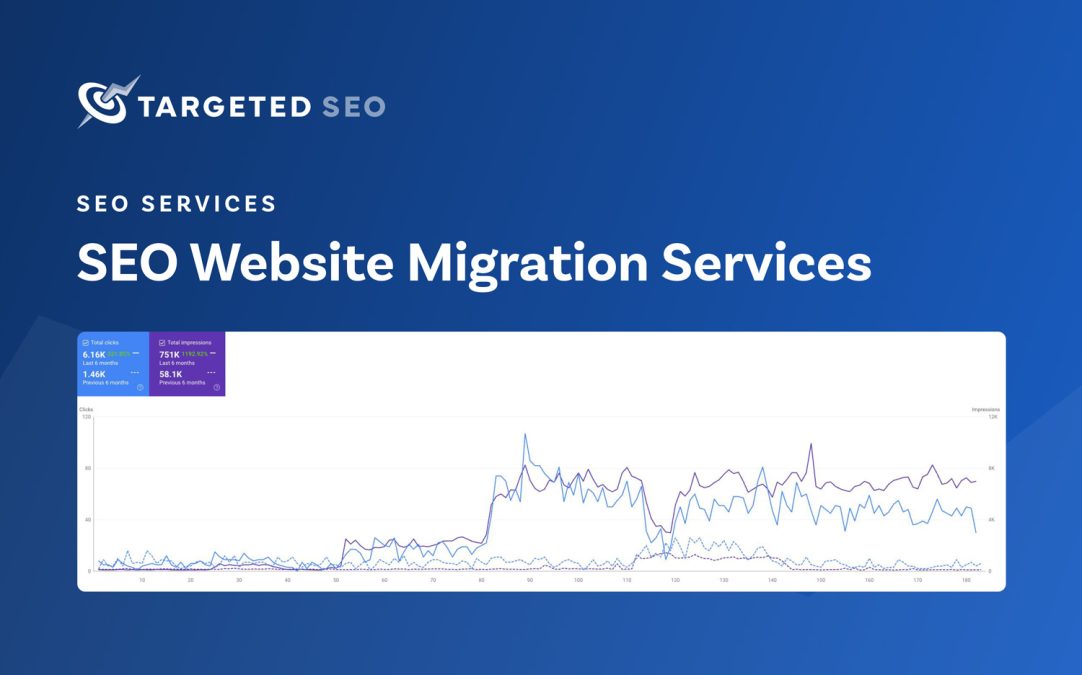
But these issues are fixable. With a thorough SEO audit, redirect strategy, and post-migration plan, it’s possible not only to recover, but grow. In fact, when done right, an SEO migration can give your website a fresh start and better performance than before!
Understanding the SEO Migration Process
The migration process typically begins with a thorough analysis of the current website’s performance, including its search engine rankings, organic traffic, and technical SEO requirements. This analysis helps to identify potential risks and opportunities for improvement, informing the development of a tailored migration strategy.
The next stage involves setting up a staging site, where the new website can be developed and tested without affecting the live site. The migration team will then implement the necessary changes, including updates to the URL structure, HTML markup, and internal linking, to ensure a seamless transition.
Post-launch, our SEO team will monitor the website’s performance, checking for broken links, missing meta tags, and other technical issues that could impact SEO performance. Ongoing monitoring and analysis are crucial to ensuring the website’s continued success, identifying areas for improvement and optimising the site for future growth.
A website migration project requires collaboration between the migration team, the development team, and other stakeholders to ensure a successful outcome. By working with our experienced SEO migration specialists, businesses can minimise the risks associated with website migration and ensure a smooth transition to their new site, preserving their existing rankings and online visibility.
Ready to migrate your website without compromising your SEO?
Contact Targeted SEO today for a tailored SEO migration strategy that protects your traffic and builds a stronger foundation for growth.
"*" indicates required fields

The risks of getting SEO migrations wrong
SEO migrations are complex undertakings that, if mismanaged, can lead to significant SEO setbacks. Understanding these risks is crucial to ensure a smooth transition and maintain your site’s search engine performance.
Loss of Organic Traffic
A poorly executed migration can result in a sudden drop in organic traffic. This often occurs when search engines encounter broken links, missing pages, or significant changes in site structure without proper redirects. Such disruptions can confuse search algorithms, leading to decreased visibility in search results and, consequently, a reduction in site visitors.
Decline in Search Rankings
Search engines rely on consistent URL structures and content to rank pages effectively. Altering URLs without implementing 301 redirects can cause search engines to treat the new pages as entirely different, stripping them of their previous ranking authority. This misstep can lead to a significant decline in keyword rankings, affecting your site’s overall search performance.
Broken Internal and External Links
During migration, it’s common for internal links to become outdated, leading to 404 errors. Similarly, external websites linking to your content may point to obsolete URLs. These broken links not only hinder user experience but also dilute your site’s backlink profile, a critical factor in SEO rankings.
Loss of Metadata and Structured Data
Metadata, including title tags and meta descriptions, along with structured data like schema markup, play vital roles in how search engines interpret and display your content. Failing to transfer this information accurately during migration can result in less informative search listings, potentially reducing click-through rates and diminishing your site’s search presence.
Improper Redirect Implementation
Using incorrect redirect types, such as 302 (temporary) instead of 301 (permanent), can mislead search engines about the status of your pages. This confusion can prevent the transfer of SEO value from old URLs to new ones, undermining your site’s authority and search rankings.
Indexing and Crawling Issues
Neglecting to update your sitemap or robots.txt file can impede search engines from effectively crawling and indexing your new site. This oversight can lead to important pages being omitted from search results, reducing your site’s visibility and accessibility to users.
Content Duplication and Canonicalisation Errors
During migration, duplicate content can inadvertently arise, especially if canonical tags are not correctly implemented. Search engines may struggle to determine which version of the content to index, potentially splitting ranking signals and diminishing the authority of your pages.
Technical Performance Degradation
Changes in hosting environments or site architecture can affect page load times and overall site performance. Slower websites not only frustrate users but are also penalised by search engines, leading to lower rankings and decreased traffic.
By acknowledging and proactively addressing these risks, you can ensure that your website migration preserves, and even enhances, your site’s SEO performance.
Moving to a New Hosting Provider or Agency
We handle the technical side: server setup, DNS and SSL configuration, crawlability checks, site performance, and site speed optimisation, all with SEO performance in mind.
Changing Website Address / Domain
A domain migration is high risk, especially without expert support, as it can significantly impact SEO traffic and website ranking. We plan and implement the entire migration, including redirects, domain verification, and Google updates, to ensure your visibility and traffic are protected.
Moving to WordPress from Another Platform
We specialise in WordPress SEO and custom design. Choosing an updated content management system (CMS) like WordPress is crucial for improving user experience and site functionality. WordPress is scalable, user-friendly, and ideal for businesses focused on long-term growth. Our custom builds are fast, easy to manage, and designed with SEO from the start. And if you’re stuck on a rigid or outdated CMS, we’ll help you transition with zero drama.
We also offer ongoing management packages combining SEO, web design, content strategy, and technical upkeep -so you can focus on running your business.
Our Main Expertise
WordPress SEO Migrations
While this page covers our broader website migration support, our core specialism is WordPress SEO migrations. We help businesses move WordPress websites between domains, hosting environments and builds without losing the organic visibility they’ve worked hard to build. If your migration involves WordPress specifically, our dedicated service page explains our process, what’s included, and how we help protect organic visibility, traffic and enquiries throughout the transition.
Migrating to WordPress from Another Platform
For many of the businesses we work with, a migration isn’t just a technical move, it’s a chance to move away from a platform that’s holding them back. We regularly support companies transitioning from platforms like Wix, GoDaddy builders and other CMS setups into WordPress. In most cases, the goal isn’t just to “move the site”, it’s to rebuild it properly.
We can design and develop a new WordPress website for your business in a controlled staging environment, giving you full visibility before anything goes live. This allows us to improve structure, performance and SEO foundations without risking your existing website.
Once the new site is ready, we manage the full launch process. That includes domain configuration, hosting setup, redirect mapping and SEO checks to ensure your visibility is protected during the transition.
After launch, we can continue to support with hosting, ongoing SEO and website management, so your site continues to grow rather than just “sit live”.
SEO-Led WordPress Website Hosting & Maintenance
Website hosting and maintenance are included as part of our ongoing SEO retainers, ensuring your WordPress site remains secure, fast and reliable as it grows.
Rather than treating hosting as a separate service, we manage it alongside your SEO. This means performance, stability and technical health are continuously monitored and aligned with your organic visibility.
Your hosting setup includes a dedicated environment designed for speed and reliability, alongside daily backups, security monitoring and regular updates to WordPress core and plugins. SSL certification, cookie compliance and server maintenance are all handled as standard.
We also keep a close eye on technical performance over time, so any issues affecting crawlability, speed or site health are identified and resolved early, not after they’ve started impacting rankings.

Helpful SEO Migration FAQs
Website SEO Migration FAQs
Thinking of migrating your website but not sure what’s involved? You’re not alone. Website migrations can raise a lot of questions, from how long it takes to what happens to your SEO visibility.
Below, we’ve answered some of the most common questions businesses ask us before, during, and after a migration. If you need tailored advice for your specific website or situation, feel free to contact us, we’re happy to help.
How long does a website migration take?
The length of a website migration depends on the size and complexity of the site. Small websites with fewer than 20 pages can often be migrated within a few days. Larger sites, especially those with complex structures, eCommerce functionality, or local SEO and international SEO, may take several weeks or even months. A proper migration plan, thorough testing, and post-launch monitoring all contribute to the timeline.
Does migrating websites affect SEO?
Migrating a website can impact SEO, either positively or negatively. Without proper planning, a migration can cause drops in traffic, rankings, and visibility. But when completed correctly, with strategic redirects, technical SEO checks, and Google Search Console updates, a migration can preserve or even improve your SEO performance.
Can you transfer an old website to a new domain?
With the right migration strategy, an old website can be safely moved to a new domain. This involves redirecting URLs, updating key settings, and ensuring search engines recognise and trust the change. The goal is to retain your site’s authority, backlinks, and organic traffic throughout the transition.
How do I transfer a website to another provider?
To transfer a website to a new hosting provider, you need to move your site files, databases, and domain settings. It’s important to maintain uptime, preserve SEO settings, and ensure SSL, caching, and redirects are correctly configured. A professional migration ensures nothing breaks during the move and search performance remains stable.
How long will it take search engines to recognise the migration?
Search engines can start recognising a site migration within a few days, but full indexing may take several weeks, or even months. Using tools like Google Search Console’s Change of Address helps speed up the process. Ongoing monitoring ensures that pages are crawled, redirects are working, and rankings begin to stabilise.
Will I need to keep my old website live?
Yes, your old website should stay live temporarily with 301 redirects in place. This ensures users and search engines are properly guided to your new site and no traffic is lost. We typically recommend keeping the old domain active for at least 6 months to a year after migration before sunsetting.
How do you preserve SEO performance when redesigning a website?
Redesigns often change more than just visuals; they can affect headings, internal links, URL structures, and content hierarchy. Evaluating a website’s visibility after its launch is crucial to ensure search engines properly index the new structure. We run a detailed SEO audit before and after the redesign to ensure that key optimised elements are carried over. Our team works closely with website designers and developers to align aesthetics with SEO performance from the start.
What happens if some old website pages are no longer needed?
If content is no longer relevant or valuable, we won’t redirect it blindly. Instead, we assess whether the page has backlinks, rankings, or traffic. If so, we redirect it to the most relevant new page. If not, we may allow it to return a 410 (gone) status, this tells search engines it’s been removed intentionally, helping maintain site quality.
Can SEO actually improve after a migration?
Yes, if handled correctly. A migration is a rare chance to fix legacy issues, streamline site architecture, improve page speed, and restructure your content. We’ve helped businesses gain traffic and rankings post-migration by combining technical improvements with on-page SEO enhancements.
What tools do you use to manage the migration process?
We use a combination of SEO tools (Screaming Frog, Ahrefs, SE Ranking), analytics platforms (Google Analytics 4, Google Search Console) for crawling, redirect testing, and server monitoring. Everything is tracked and can be shared with you or your team, for full transparency.
How Much Does an SEO Migration Cost?
The cost of a website SEO migration depends on the size, complexity, and goals of the project, with a key focus on maintaining SEO value during the migration process. A basic migration for a small business website typically starts from £950, while more advanced migrations involving CMS changes, rebranding, or technical SEO support can range between £1,500 – £4,000.
Why choose us for your SEO migration?
We’ve handled migrations across industries, from simple rebrands to complex domain changes, emphasising the critical importance of a well-planned site migration process. Our approach is collaborative, methodical, and focused on results. Every decision we make is backed by SEO strategy and real-world experience.
Enquire for more migration help

SEO Services
Additional Services to Support Your Migration
A successful SEO migration doesn’t end with redirects and technical setup. To maximise the benefits of your new website and protect long-term visibility, we offer a range of complementary services. These are designed to strengthen your site’s performance post-migration, resolve existing issues, and position your business for future growth.
Website Rebranding
If your migration includes a rebrand, we’ve got you covered. Our team can handle everything from logo and visual identity to site design and content, all aligned with SEO best practice and built to scale.
Website SEO Audits
Already migrated but lost traffic? Our SEO audits reveal what went wrong and how to fix it. We review redirects, internal linking, content structure, crawlability, and metadata to get your site back on track.
Technical SEO
From structured data to indexation and server speed, we cover all technical angles. Our work ensures search engines can crawl and understand your site, which directly impacts visibility.
On-Page SEO
Every page on your site needs to be optimised, especially after a migration. We revise titles, headings, metadata, and content layout to improve relevance, readability, and performance.
Dedicated Hosting
Our optimised WordPress hosting is fast, secure, and stable. With caching, uptime monitoring, and performance enhancements built in, it supports both growth and user experience.
SEO-led Web Design & Development
Our SEO-led web design service ensures your new site is built with search performance in mind from day one. We create fast, modern WordPress websites that balance clean design with solid technical foundations. Every layout, navigation structure, and content area is developed to support visibility, user engagement, and long-term scalability.