
AI-powered search is already changing how people find services and make decisions online. It’s no longer just about ranking in Google. Platforms like ChatGPT, Google’s AI Overviews, Claude, and Perplexity are now delivering direct answers, often quoting content from websites without users needing to click through.
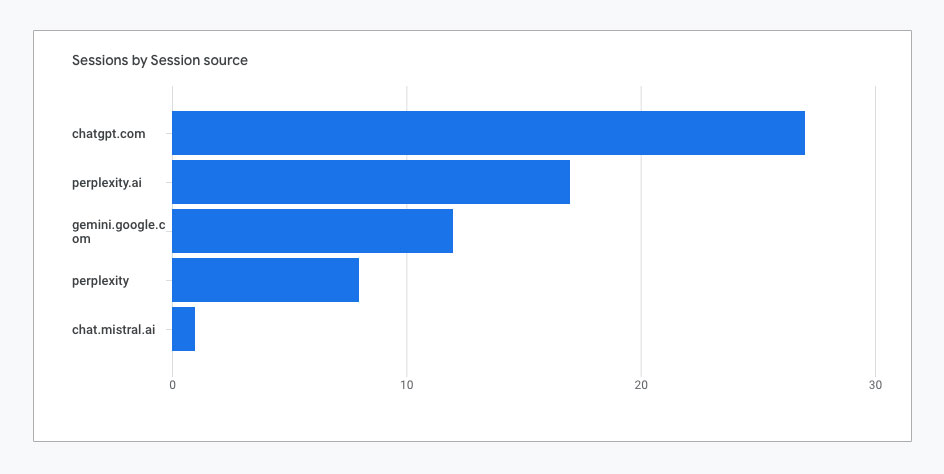
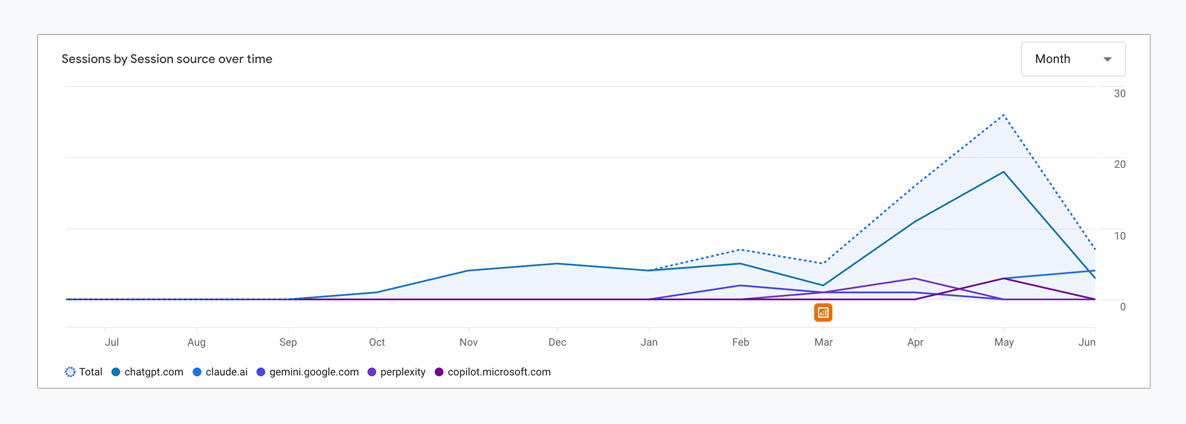
By 2027, nearly 90 million people in the U.S. are expected to use generative AI as their primary method for online search. AI-driven platforms are already responsible for around 10% of traffic to some websites, and that number is growing.
This shift means your website is now competing across a wider generative ecosystem. Visibility depends not only on technical SEO but also on how well your content is structured, how clearly it answers questions, and how much trust it conveys to both users and AI systems.
At Targeted SEO, we help small and medium-sized businesses build websites and content strategies that thrive in this new environment. Through our AI SEO agency service, we ensure your site is structured, credible and visible where it matters most. From renewable energy to financial services and healthcare, our clients are already seeing steady growth in AI-driven traffic, and we expect this to become a core source of discovery in the years ahead.
AI Search Optimisation Checklist for Small Businesses
- AI search is already impacting traffic
Platforms like ChatGPT, Google’s AI Overviews and Perplexity are surfacing website content directly in their answers, often without users visiting traditional search results. AI-driven traffic is growing and here to stay. - Visibility now depends on content structure and trust
To appear in AI-generated results, your content must be well-structured, clearly written, and demonstrate real expertise through E-E-A-T signals (Experience, Expertise, Authoritativeness, and Trustworthiness). - Traditional SEO still matters – but it’s evolving
Keywords, technical SEO, and backlinks remain essential, but they must now support visibility across generative search engines, not just Google. - Content needs to answer questions directly
AI tools prefer concise, accurate content that addresses user intent. Clear headings, summaries, FAQs and schema markup all help make your content easier to extract and display in AI results. - Internal linking and schema boost discoverability
Strong internal linking and structured data help AI tools understand how your pages connect, reinforcing topical authority and improving your chances of being quoted or featured. - Measurement must include AI visibility
Success in AI search isn’t just about rankings. Monitor how often your content is surfaced in AI-generated answers, alongside metrics like engagement and conversions in tools like Google Analytics and Search Console. - Generative Engine Optimisation (GEO) is the new frontier
GEO is about making your content discoverable and quotable in AI responses. It’s the next evolution of SEO and it’s already delivering results for forward-thinking businesses. - Small businesses can compete and win
With the right SEO strategy, SMEs in finance, healthcare, renewable energy and other sectors can achieve strong visibility in AI search by focusing on clarity, authority and structure.
How AI Search Engines Work and What They Expect from Your Content
AI-powered search engines work very differently from traditional ones. Instead of ranking web pages in a list of links, tools like ChatGPT, Google’s AI Overviews, and Perplexity extract content from trusted sources and repackage it into direct, conversational answers.
This means visibility isn’t about position on the page, it’s about being selected, quoted, and trusted by the AI model.
To do that, your content must be:
- Expert-led: Written or reviewed by people with subject matter expertise
- Structured: Using clear headings (H1, H2, H3), summaries, and schema markup
- Extractable: With direct answers that match how people phrase real queries
- Trustworthy: Supported by reviews, case studies, citations, and internal links
Top-performing content often benefits from a ‘snowball effect’: once it’s featured in AI-generated responses, it tends to be reused, referenced and discovered more frequently across other tools.
To stay visible, your site needs to move beyond keyword optimisation. You need to anticipate what users are asking, and structure your content in a way that AI platforms can understand and confidently present.
How to Optimise Your Website for AI Search: 7 Key Actions
Now that you understand how generative search engines work, it’s time to adapt your website and content accordingly.
Here are the core actions we take to improve visibility in AI-powered search environments. These strategies help make your content easier for AI systems to extract, trust and feature in their answers.
1. Create Expert-Driven Content
AI systems favour trusted sources. That means content written or reviewed by genuine subject matter experts.
We help businesses establish authority by publishing high-quality, insight-led content in collaboration with professionals, whether that’s a financial adviser, healthcare consultant or renewable energy specialist.
It’s not about keywords for the sake of SEO. It’s about sharing useful, reliable knowledge that answers real questions and reflects your experience.
2. Answer Questions Directly
AI tools prioritise clarity. Your content should address key questions early, without long introductions or vague explanations.
Think like your customer: what would they ask in plain language? These queries often sound conversational, and your content should match that tone while offering clear, structured responses.
We build each piece of content around intent, starting with a summary, followed by direct answers and supporting context. This helps AI systems identify and surface the right information from your pages.
3. Use Structured Formatting
The way your content is formatted plays a huge role in how it’s interpreted and extracted.
We structure every page with:
- A single H1 to define the topic
- Clear, descriptive subheadings (H2s and H3s)
- Short paragraphs and bullet points for scannability
- Practical elements (like code samples or tables) when relevant
This approach improves accessibility for users and helps your content qualify for featured snippets and AI-generated summaries.
4. Add Internal Linking and Context
Internal links build topical depth and help AI understand how your content is connected.
We create internal link strategies that support navigation, improve time on site, and reinforce your expertise across key topics.
For example, a financial planning service page might link to related blogs, FAQs, and case studies. We also incorporate user-generated content, like testimonials, to enhance trust and provide social proof.
5. Implement Schema Markup
Schema provides essential context behind the scenes, helping AI tools understand your content at a deeper level.
We add structured data to all key pages, including:
- Business type
- Service pages
- FAQ sections
- Customer reviews
- Articles and blog content
This improves how your site appears in rich results and AI-generated answers, making your content more discoverable and quotable.
6. Build E-E-A-T Signals
AI platforms prioritise content from sources that demonstrate Experience, Expertise, Authoritativeness, and Trustworthiness (E-E-A-T).
We help businesses build these signals by:
- Attributing content to named experts
- Including bios or credentials
- Linking to credible third-party sources
- Showcasing client reviews
- Publishing in-depth case studies
- Securing mentions from relevant, trusted websites
This is especially important for regulated sectors like finance and healthcare, where trust is non-negotiable.
7. Publish Case Studies and Reviews
Nothing builds credibility like real-world results.
Case studies show your services in action and help potential customers understand what to expect. They’re also a strong signal to AI systems that your business has proven expertise.
High-quality reviews on third-party platforms, like Google or Trustpilot, add external validation. We often repurpose these into service pages and mark them up with schema to increase their visibility in AI summaries and featured content.
If you’re not actively publishing this kind of content, you’re missing a key part of the AI optimisation process.
How to Measure Success in AI Search
Success in AI search requires a different mindset than traditional SEO.
While keyword rankings and organic traffic are still important, they no longer tell the full story. AI search visibility, how often your content is extracted, quoted, or summarised by generative tools, is now a key performance indicator.
At Targeted SEO, we can track:
- Which pages are being surfaced in AI-generated answers
- How users engage with those pages (clicks, conversions, time on site)
- Where structured content and schema are driving visibility
- How changes in formatting or topic coverage affect AI performance
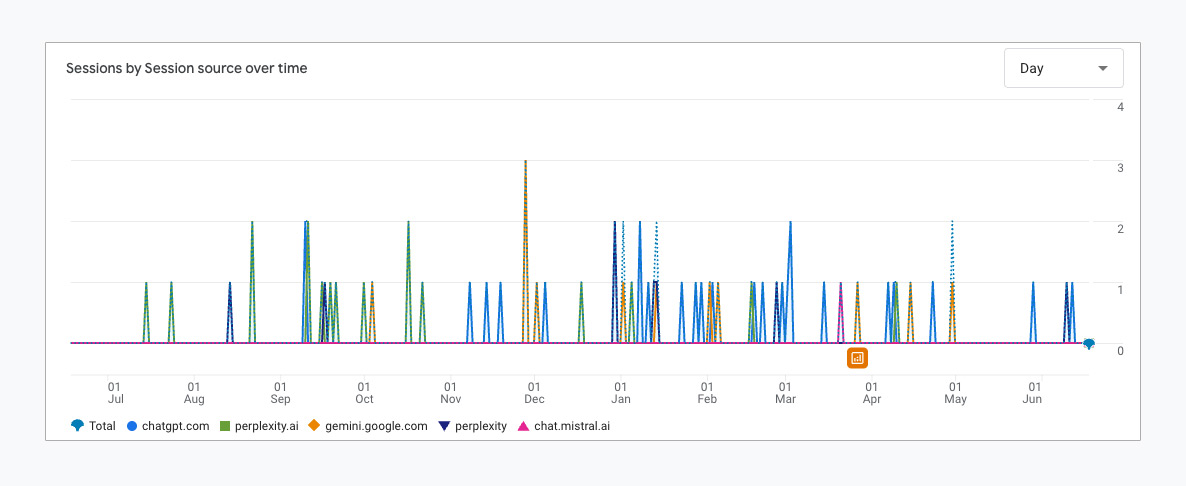
We use tools like Google Analytics and Search Console to monitor both conventional traffic and engagement from AI-influenced sessions. This helps us identify what’s working, where content can be refined, and how your site is performing across both traditional and generative search environments.
The goal is not just more visibility but better visibility. That means your content is being surfaced in the right context, to the right users, with measurable business impact.
Generative Engine Optimisation (GEO): Why It Matters
Generative Engine Optimisation (GEO) is the strategy behind getting your content featured in AI-generated results, not just ranked in search listings.
Unlike traditional SEO, which focuses on keywords and link signals, GEO prioritises clarity, structure, and authority, so your content can be extracted and repurposed by AI tools. This includes AI Overviews in Google, as well as answers provided by tools like ChatGPT and Perplexity.
A well-executed GEO strategy offers a dual benefit:
- Better performance in AI-generated responses
- Stronger visibility in traditional search results
To succeed with GEO, your content should:
- Anticipate and answer user questions in plain language
- Be structured for easy extraction (e.g. summaries, lists, clear headings)
- Reflect expertise and trust through E-E-A-T principles
- Include proven formats like FAQs, ‘how-to’ guides, and comparisons that AI tools like.
We help businesses align their website strategy with how search engines and language models now interpret and prioritise information, ensuring your brand is not just discoverable, but featured.
What is AI search optimisation?
AI search optimisation is the process of enhancing your website content to increase its likelihood of appearing in AI-powered search engines, such as ChatGPT, Google’s AI Overviews, or Perplexity, to improve your search rankings in both traditional and AI-driven environments. It involves structured content, expert insights, internal linking and E-E-A-T signals.
How can I get my website to appear in AI-generated search results?
To appear in AI-generated answers, your content must be clear, concise, trustworthy, and offer valuable information. Use structured formatting, include schema markup, answer questions directly, and ensure your site builds authority through expert-led content and quality backlinks. SEO and GEO are not separate strategies, but two sides of the same coin, working together to enhance your online presence across both traditional and AI-driven search environments.
Is traditional SEO still relevant in the age of AI search?
Yes, traditional SEO principles like technical optimisation, on-page content quality, and link building still matter. But they must now support discoverability in generative engines, not just blue links on Google, and marketing efforts should be aligned with both traditional and AI-driven SEO strategies.
Can small businesses compete in AI search results?
Absolutely. Small businesses with focused, expert content and strong local signals can outperform bigger competitors. It’s about relevance and authority, not just scale, and marketing professionals play a crucial role in helping small businesses adapt and succeed in AI-driven search environments.
How is AI changing local search results?
AI is beginning to surface local businesses directly in conversational answers. Platforms use reviews, schema, Google Business Profile data, Google’s AI Overviews, and website content to decide what gets mentioned. Keeping these sources aligned is essential.
The Future of AI Search
AI search isn’t a passing trend; it’s reshaping how people find answers and services online. Tools like ChatGPT, Google’s AI Overviews and Perplexity are changing user behaviour, pulling information directly from websites and presenting it in conversational formats. This means your content may now be surfaced without a user ever clicking a traditional search result.
For business owners, this shift demands a new approach. It’s no longer enough to rank in Google, you need to be referenced, quoted, and trusted by AI systems that summarise and repackage your content.
Staying competitive in this environment means:
- Keeping your website technically sound and well-structured
- Publishing expert-led content that directly answers user questions
- Monitoring how your pages appear in AI tools, not just in organic rankings
The businesses that adapt early will be the ones that benefit most. At Targeted SEO, we help you stay ahead by aligning your website and content strategy with how AI search engines actually work today, not just how they worked last year.
If you’re in a competitive space like finance, healthcare, or renewable energy, showing up in these new results could be the difference between getting the click or being invisible.
At Targeted SEO, we specialise in building SEO-led websites and SEO strategies that thrive in this new era. From schema to structured content, we ensure your business is positioned to be discovered, trusted, and chosen.
Get Your Website AI-Ready – Apply for an AI SEO Audit
Want to know how well your current site performs in AI search? We can offer you a professional AI SEO audit to assess how visible and effective your website is across AI-powered search platforms, including Google’s AI Overviews, ChatGPT browsing, and other generative tools.
This isn’t a generic checklist. Your audit will be carried out by an experienced SEO Strategist who understands how generative engines interpret and surface content. We combine hands-on expertise with leading SEO software and insights from platforms like Google Analytics and Search Console to give you a clear, actionable view of your current position.
Our AI SEO audit will:
- Identify how your website performs in AI search environments
- Pinpoint gaps in content structure, schema, and E-E-A-T signals
- Assess how well your site answers key user questions
- Review internal linking and topic coverage
- Highlight opportunities to improve visibility in AI-generated results
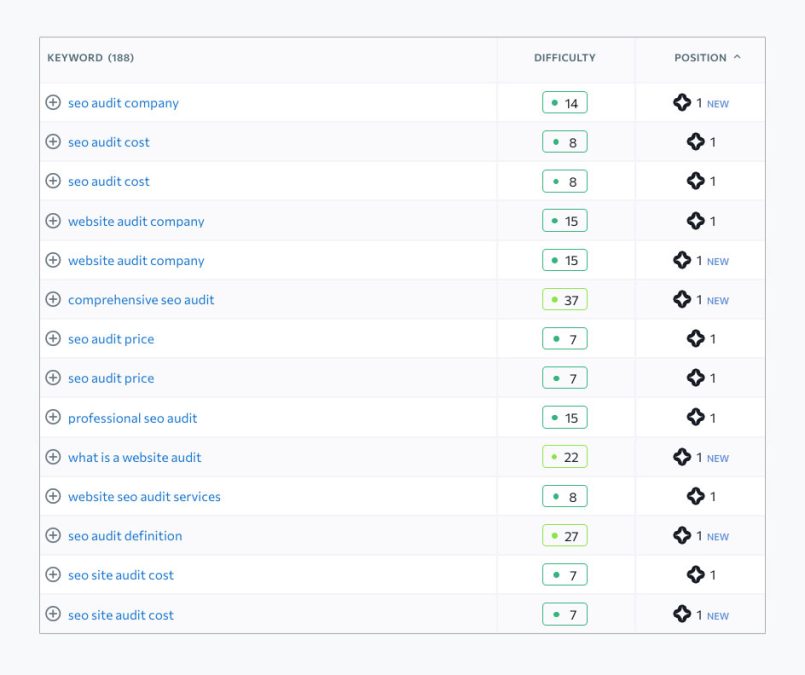
Whether you’re already investing in SEO or just starting out, this AI SEO audit will show exactly where you stand and what to do next to stay ahead. Contact us today to receive audit prices and schedule a consultation.
Talk to an AI SEO Specialist
We’ll help you stay ahead while your competitors play catch-up. Learn more about our Generative Engine Optimisation service and speak to an SEO specialist.