
SEO is not the same beast as it was five or even two years ago. Smarter algorithms, rising user expectations, and now AI-powered search have changed how people find information and brands.
Today, SEO is less concerned with chasing rankings and more focused on understanding user intent, building brand authority and creating valuable content to grow visibility. The bar has been raised. Companies must genuinely earn attention.
As a result, the traditional measures of SEO success are not as meaningful.
SEO ROI in 2026 isn’t about rankings or traffic spikes: they are indicators, not proof of return. To understand the real commercial impact of SEO, it’s essential to look at the quality of leads, the revenue generated from organic search, and how organic visibility supports conversions.
Instead of fixating on so-called ‘vanity metrics’ like keyword ranking and clicks as a measure of your SEO efforts, ask: Is the pipeline healthy? Are the right enquiries coming through? Ultimately, is organic search contributing to actual business results? These are the answers that tell you whether SEO is working.
In this article, we’ll look at what SEO success really means now, which metrics actually reflect business impact and how to calculate the ROI of SEO depending on your business model.
At Targeted SEO, we feel confident in this new era, as this has always been how we’ve approached SEO: quality and steady growth rather than quick wins. Our case studies and reviews are a testament to this.
If you’d like to explore what positive SEO ROI looks like for your business, we’d be happy to talk.
Ben Sisson – Director @ Targeted SEO LTD.
Why traditional SEO metrics no longer tell the full story
Let’s start by questioning three common assumptions about what SEO success looks like.
1. Rankings
Assumption: “If we’re ranking on page one, our SEO campaign is working”
Reality: Ranking may feel like winning, but it doesn’t always mean you’re being chosen (or even seen).
Rankings feel reassuring, but they’re far less stable and meaningful than they used to be. Positions move daily, sometimes hourly, depending on location, device and personal search history.
You can also rank highly for keywords that attract curiosity rather than commercial intent, which may improve keyword positions but does little to generate revenue.
Add AI Overviews into the mix, and being number one in Google doesn’t even guarantee you’ll be seen, let alone clicked. While it’s true that Google still dominates search in early 2026, a recent report suggests that traffic from AI search may surpass traffic from traditional search by 2028.
Rankings still matter for now, but they’re only the starting point. What really counts is whether that visibility turns into meaningful action and measurable business results.
2. Organic Traffic
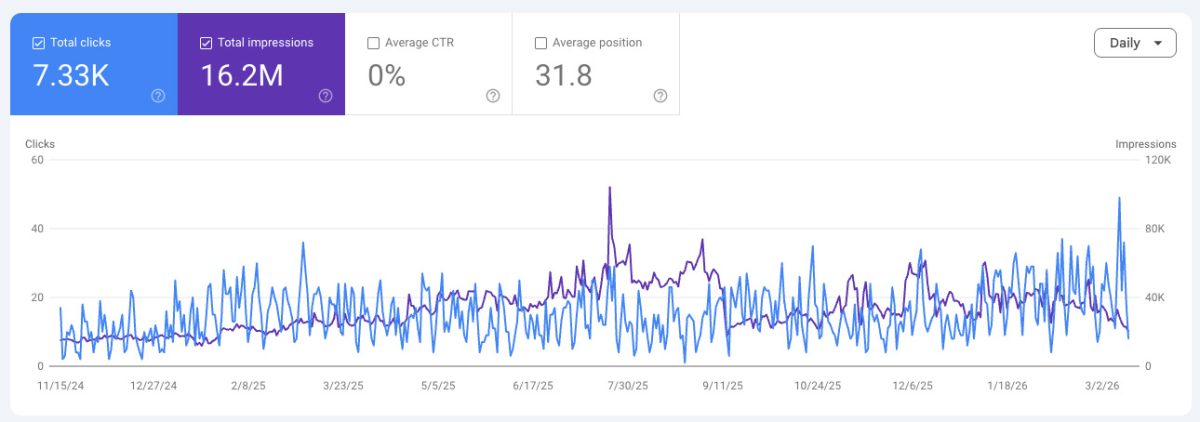
Assumption: “Clicks are up, so business growth must follow”
Reality: The true value isn’t in being found by everyone, but in being found by the the right users when they are close to a decision. The rest is just noise.
Watching traffic numbers climb steadily each month looks and feels like progress. But not all traffic is equal, and more visitors do not automatically mean better website performance or stronger business outcomes.
A large proportion of search traffic can be informational. People researching, browsing or satisfying curiosity rather than actively looking to buy your product or service. That kind of visibility holds value in that Google sees your content is popular, but it doesn’t always translate into enquiries or sales.
High organic traffic growth with low conversion can actually weaken ROI. You’re investing in visibility without seeing a meaningful return. And with AI Overviews, users may get the answers they need directly on the search page, reducing clicks even when your content is technically “visible”.
3. Clicks
Assumption: “SEO can’t be working if clicks are not increasing”
Reality: Search behaviour has evolved. Fewer clicks means fewer window shoppers and more high-intent buyers.
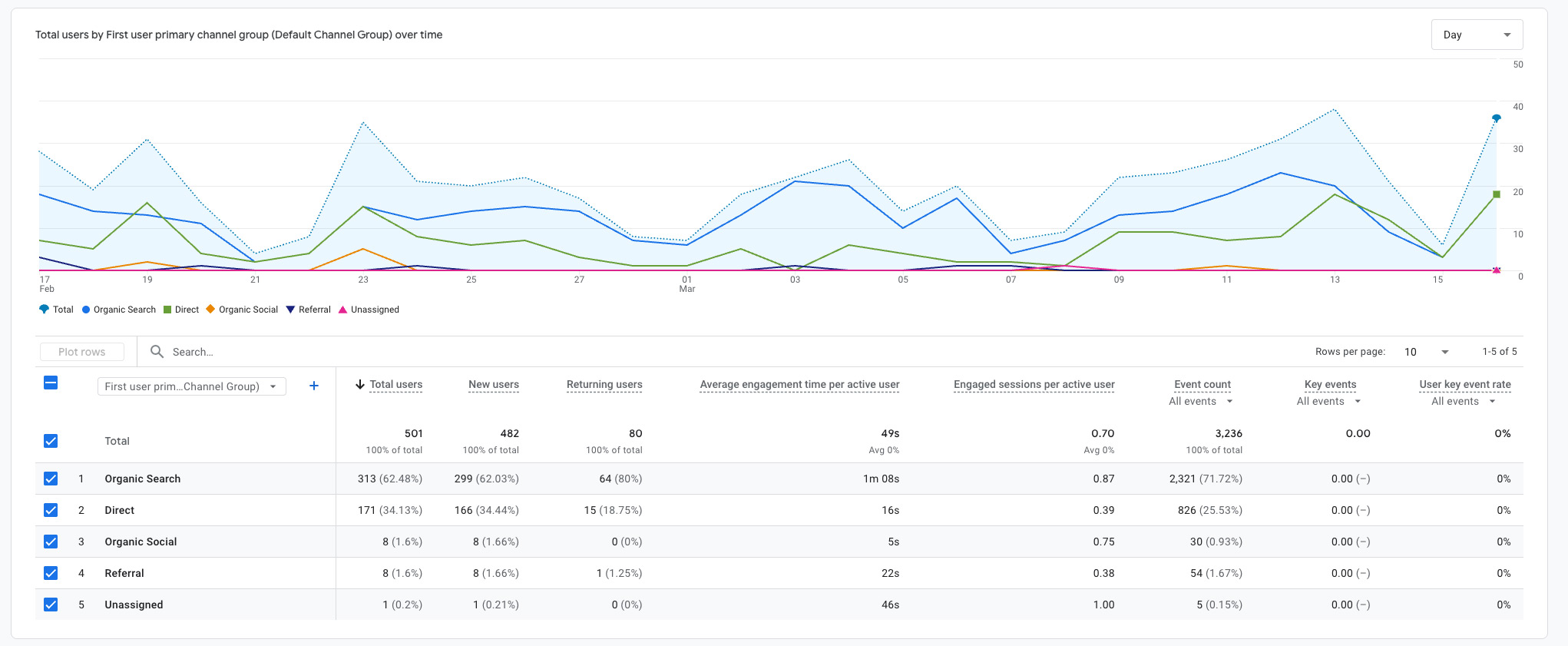
It’s easy to assume that if click-through rates dip, SEO has “gone wrong”. For years, clicks were the pinnacle of SEO data. But AI-powered search is changing what happens before someone ever reaches your website.
Users compare brands, scan key points and build shortlists without clicking through multiple pages. Your business may influence the decision long before a session is recorded in analytics.
That means impressions and brand visibility are playing a bigger role. In some query types, clicks are declining not because relevance has dropped, but because behaviour has shifted.
SEO isn’t disappearing. But the way we interpret performance data needs to evolve. A drop in clicks doesn’t automatically equal a drop in impact, and that’s an important distinction in 2026.
SEO Metrics That Matter in 2026
SEO metrics have moved beyond just rankings and traffic. Yes, they are still helpful, but are best viewed as signals rather than the whole story. In 2026, we are interested in metrics that show the business impact, i.e., leads, conversions and revenue.
1. Lead Quality and Conversion Rates
The sum of your enquiries alone doesn’t tell you much. What matters is how many of those enquiries are relevant and likely to convert into sales. Five new enquiries might well be more valuable than 50.
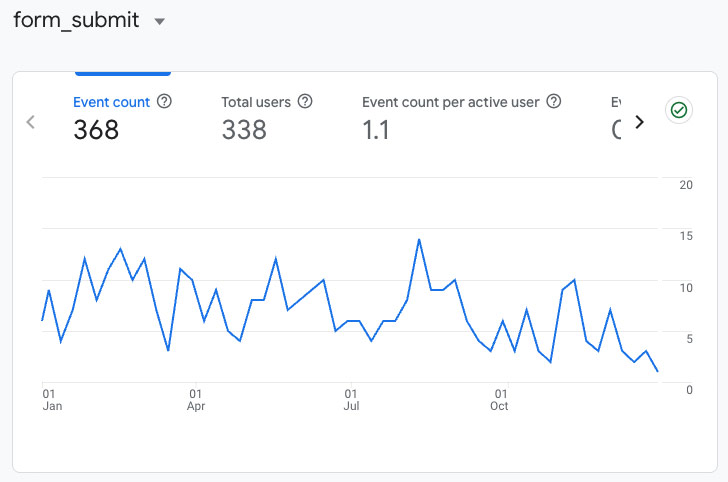
Using tools like Google Analytics and proper conversion tracking, you can see how users from organic search actually behave on your site. Are they simply browsing, or do the sessions end in an action? You can then use your CRM data to see if they eventually convert. From there, you can calculate the enquiry-to-sale ratios and acquisition cost, giving you a much clearer view of SEO performance.
Feedback from your sales team is also helpful. Are the leads from organic search better than before? If SEO is working properly, it should be attracting the right prospects who are closer to making a decision.
2. Revenue and Assisted Conversions
SEO rarely works in isolation. In many industries, particularly B2B, buyers take time to research before making contact. Someone might discover your business through search, return later through another channel and convert then.
This is where assisted conversions come in. SEO often plays a key role early in the journey, introducing your brand and building trust. Even if the final click happens elsewhere, the original search may still have influenced the decision.
Using Google Analytics, we can see how organic search contributes to conversions over time as the first attributed traffic channel. This helps us understand SEO’s contribution to revenue rather than assuming the last click tells the full story.
Visibility still matters, but more than just rankings, we look at share of voice across important keywords, citations in AI summaries and presence in features like snippets, maps or FAQ.
Even if users don’t click immediately, this repeated exposure builds familiarity and trust in a brand, which can influence buying decisions at a later date.
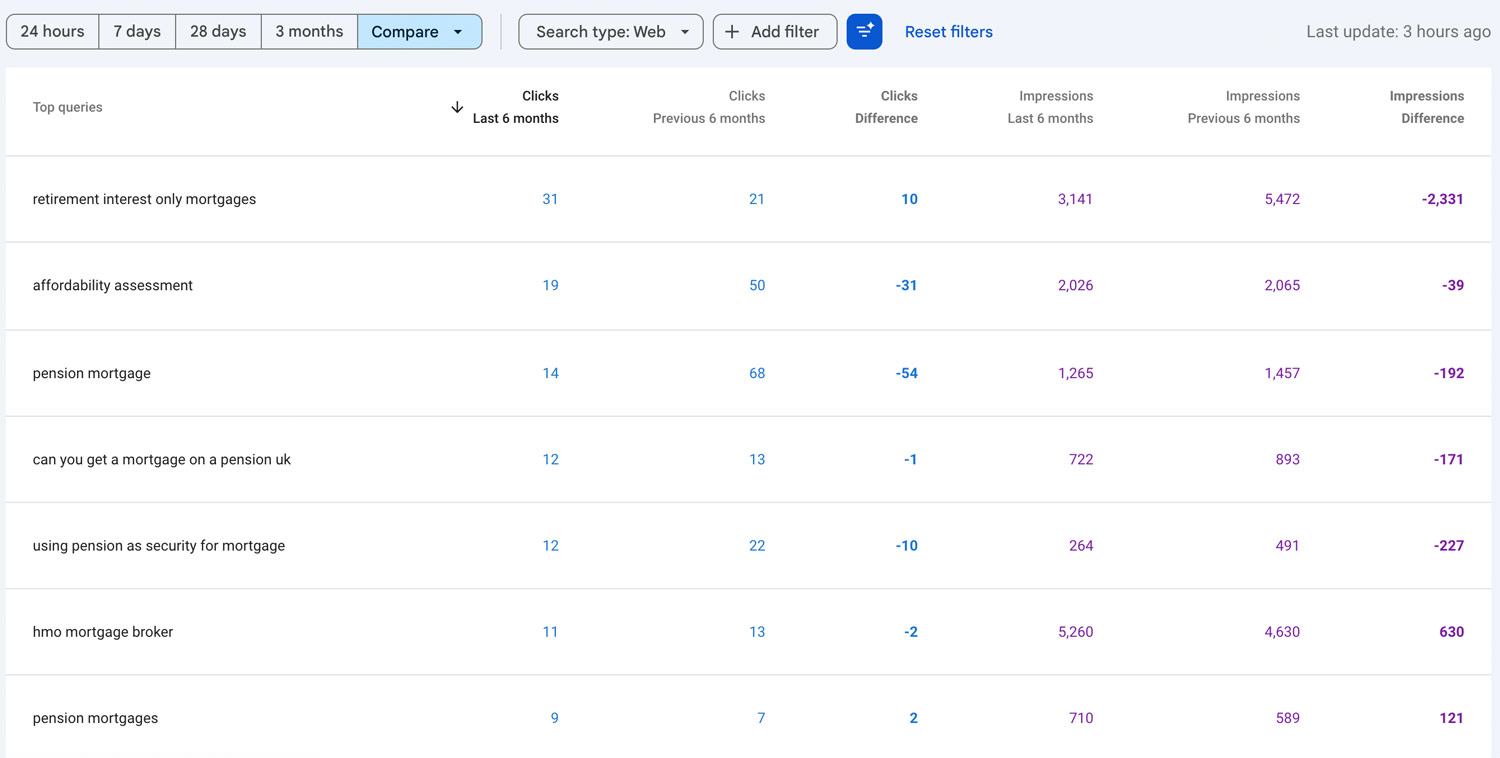
SEO tools such as Ahrefs, SEMrush and Google Search Console help track keyword coverage, impressions and overall visibility across search results. These platforms make it possible to see how often your brand appears for important searches, how that compares with competitors, and whether your visibility is expanding over time.
How to calculate SEO ROI depending on your business model
SEO ROI (return on investment) is the measurable financial gain generated, compared to your SEO spend. Tracking ROI helps you understand how much value your SEO activities are creating.
When calculating ROI from SEO, the goal is to understand how much revenue your organic visibility generates compared to the investment required to achieve it.
Whatever SEO ROI formula you use, the principle is the same: SEO should be measured by the effect on your bottom line, not just the visibility it creates.
It’s the proof that SEO is a scalable revenue engine, not just another expense.
Lead-Driven Businesses
For lead-generation businesses, like financial services firms, SEO ROI measurement is about pipeline growth rather than direct sales. Rather than looking at traffic numbers, it’s about determining whether organic search is generating genuine enquiries.
In practice, this means tracking form submissions, bookings and phone calls from organic visitors. When this data is connected to your CRM, it becomes possible to see what happens after the enquiry. How many leads convert? What revenue do they generate? This is where SEO performance becomes much clearer.
A simple way to estimate monthly SEO ROI for lead generation looks like this:
(Monthly organic leads × Close rate × Average order value) − SEO costs = SEO ROI
This approach helps businesses understand whether organic search is contributing revenue rather than simply increasing clicks.
For service-based businesses, it can also be useful to factor in customer lifetime value, especially where clients stay with the business for many years. In these cases, the true return from SEO may be much higher than the initial deal value suggests.
You can estimate this using a simple formula:
(Monthly organic leads × Close rate × Customer lifetime value) − SEO costs = SEO ROI
This approach reflects the long-term revenue generated from SEO rather than just the value of the first sale, giving a more accurate picture of how organic search contributes to business growth.
eCommerce Businesses
For eCommerce businesses, where purchases happen directly on the website, SEO ROI can be linked quite clearly to revenue.
Organic revenue is the starting point. Analytics platforms can show how much revenue comes as a result of organic search, i.e., non-paid search results.
But it’s also important to consider assisted conversions. SEO often plays a role earlier in the buying journey; it’s not all about the final click. A customer might discover a product through search, return later through email or paid ads, and then complete the purchase.
A simplified SEO ROI formula for eCommerce looks like this:
Total revenue influenced by organic search − SEO spend = SEO ROI
Another useful metric is revenue per visitor, which shows how valuable each organic visitor is.
Revenue per visitor = Total organic revenue ÷ Total organic visitors
This helps businesses understand not just how much traffic SEO is generating, but how effectively that traffic is converting into real sales.
The Role of CRO in SEO ROI
Conversion Rate Optimisation (CRO) is the process of improving your website so more visitors take a meaningful action, whether that’s a purchase, an enquiry, a booking or a call. CRO is about removing friction, improving user experience and making it easier for the right visitors to convert.
In simple terms, SEO gets people through the door, and CRO helps get more of them over the line. In terms of ROI, this means efficiency. If you double your conversion rate through CRO, you double your revenue without spending an extra penny on generating traffic.
To measure the impact, the formula looks like this:
Traffic × Conversion Rate × Average Value = Revenue.
Let’s look at how this might play out in reality:
| Metric | Current State | With 1% CRO Lift |
|---|---|---|
| Monthly Organic Traffic | 1,000 visitors | 1,000 visitors |
| Conversion Rate (Leads) | 2% (20 leads) | 3% (30 leads) |
| Lead-to-Client Close Rate | 20% (4 clients) | 20% (6 clients) |
| Average Client Value (Year 1) | £3,000 | £3,000 |
| Total Monthly Revenue | £12,000 | £18,000 |
The key takeaway is that SEO and CRO are two sides of the same coin and must work together.
The Impact of AI Search on SEO Measurement
As I’ve mentioned several times already in this blog, it’s essential to consider the impact of AI search when calculating SEO ROI.
AI is changing how people interact with results pages. Users can get quick but detailed summaries before deciding whether to click through to a website.
As a result, impressions may be rising while clicks remain flat or even decline for certain queries. But that doesn’t necessarily mean your content isn’t influencing decisions. People are often forming opinions and shortlisting brands directly from the search results page.
Visibility within AI overviews, brand mentions, citations, and how frequently your content is surfaced as a source are becoming just as important as rankings, traffic and conversions.
SEO isn’t just about driving the click. It’s about shaping the decision.
If you want a clearer picture of your SEO ROI, it’s important to look beyond traffic alone and understand how your brand is appearing across both traditional and AI-driven search. That’s where a more complete SEO performance review becomes essential.
How Long SEO Takes to Deliver ROI
The question on everyone’s mind when deciding how much to invest in SEO is simple: how long is it going to take to pay off? It’s a completely fair question, whether you’re answering to investors who expect to see a clear return, or you’re a small business owner watching cash flow.
Our answer, as always, is: like all worthwhile investments, organic SEO is a slow burn, but it’s highly sustainable. The results compound over months and years. For quick, short-term wins, your budget is best spent on paid ads.
In the early months, you should see an increase in visibility. This might show up as your website appearing for more relevant search terms, higher impressions in search results, and gradual movement up the rankings for important keywords.
You might also start to notice higher-quality traffic and stronger engagement, such as visitors spending more time on your pages, exploring more of your site, and interacting with key content or enquiry forms.
Although you might not see the impact on the bottom line yet, these signs indicate that your SEO strategy is gaining traction.
At this stage, it’s essential not to lose faith and back out. Google and AI search engines need time to trust your website, and stop-starting erodes that.
Momentum matters, which is why the businesses that see the most success make a long term SEO investment. Working with an SEO agency typically involves a fixed monthly fee covering ongoing SEO strategy, content creation, technical optimisation, website design and development.
Over time, continuous optimisation helps your site convert visitors more effectively, and the growing volume of data makes it easier to see what’s working and refine your strategy.
How to Report SEO ROI to Stakeholders
When talking to stakeholders, drop the SEO jargon and replace it with language they understand: revenue, pipeline, cost per acquisition.
It’s also important to explain fluctuations. For example, if traffic takes a dip but the quality of leads is on the rise, be sure to frame it as what it is: a strategic win. The bigger picture matters.
It’s also really important to set realistic expectations. SEO performance builds over time, so reporting should look at trends and trajectory rather than month-to-month swings. This helps stakeholders understand the long-term value of consistent SEO investment.
Conclusion
Rankings and traffic still offer useful signals, but they are only indicators and not evidence of a positive ROI. What really matters is whether your visibility in search is turning into qualified leads, sales and long-term growth. As AI reshapes how people discover and evaluate businesses, SEO measurement must focus on real commercial outcomes.
When approached strategically and given time to compound, SEO can become one of the most sustainable sources of growth.
Want a Clearer Picture of Your SEO ROI?
If you’re already investing in SEO but unsure how much value it’s really generating, you’re not alone. This is one of the most common challenges businesses face as campaigns grow.
At Targeted SEO, we focus on aligning SEO with your commercial goals. That means prioritising the work that drives qualified leads, supports revenue growth, and builds long-term visibility, not just improving rankings for the sake of it.
We work with you to connect SEO performance back to what actually matters in your business, so you have a clearer understanding of where organic search is contributing and where there’s more opportunity to unlock.
If you’d like a more grounded view of how your SEO is performing, and how it can better support your business outcomes, get in touch.
Frequently asked questions – How to Measure SEO ROI in 2026
How do you measure SEO ROI accurately?
SEO ROI is measured by comparing the revenue or pipeline generated from organic search with the cost of your SEO investment. This might include direct sales, qualified leads, assisted conversions and customer acquisition cost. The exact approach depends on the business model (see more on this above), but the goal is always the same: understanding how search visibility translates into real commercial value.
Are rankings still important in 2026?
Yes. As long as Google remains the dominant search engine, rankings will continue to matter. After all, the first goal of SEO is visibility. But rankings shouldn’t be mistaken for success on their own, as we’ve explored in this article. What matters just as much is how visible your brand is across the wider search landscape, including AI-generated results, and whether that visibility is translating into real enquiries, sales and business growth.
Can SEO ROI be compared to paid advertising?
When comparing organic SEO ROI to paid advertising, it’s vital to recognise that the former is a long-term investment and the latter is a very much a short term tactic. Paid ads work immediately, but the effects are temporary. Organic SEO is a longer-term, sustainable investment: with continued effort, results compound over time.
How much does SEO cost in 2026?
The cost of SEO varies depending on factors such as the competitiveness of your market, the scope of the strategy and whether you work with an in-house team or an SEO agency. For most SMEs, a realistic SEO budget in 2026 is between £1,000 – £3,000 per month.